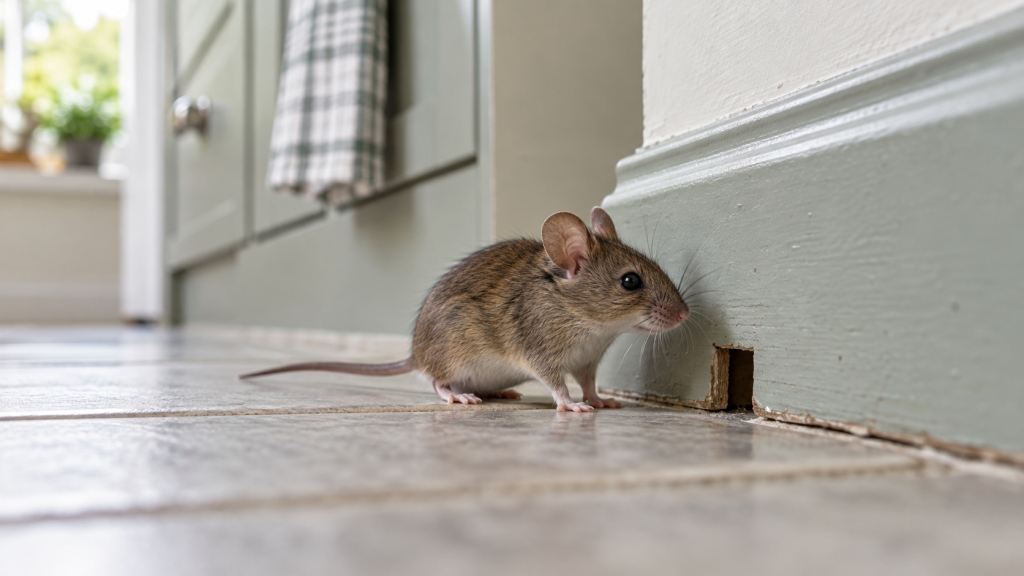
A scratching sound behind a kitchen unit is easy to dismiss. A few dark specks in a cupboard are less easy to explain. If you suspect mice in your Hillingdon home, the useful first step is to establish what you have actually found. A sighting tells you something; a pattern of fresh signs tells you much more. This guide explains how to check the likely routes, reduce access to food and decide when an inspection would help.
Start with evidence, not assumptions
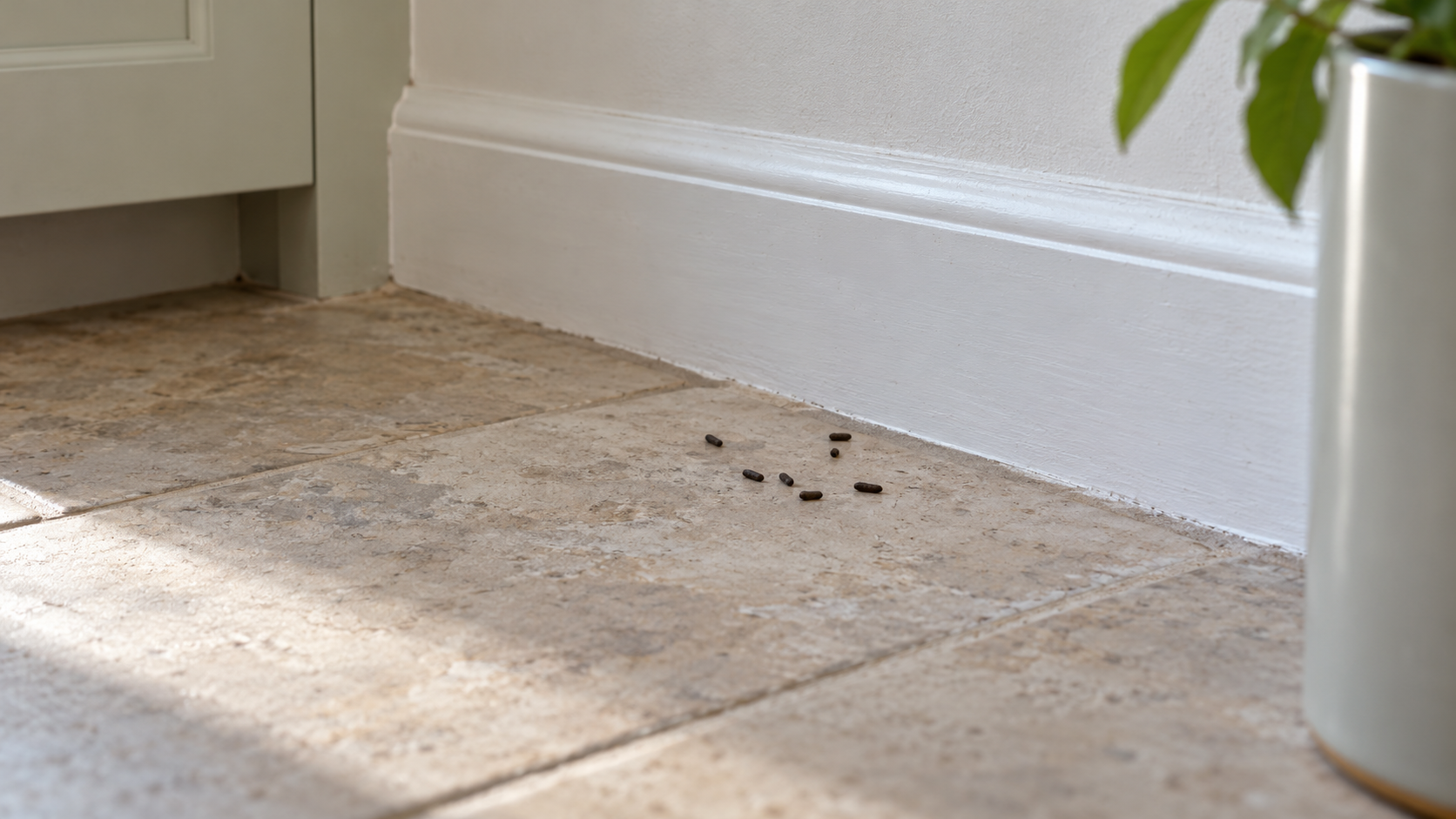
House mice often remain out of sight, so look for several signs together. Small dark droppings may appear along skirting boards, behind appliances, under the sink or inside food cupboards. You might also find damaged packets, gnaw marks, nesting material or a stale smell in an enclosed space. The British Pest Control Association lists these as common clues. A noise alone is less conclusive: birds, squirrels and rats can also be heard in parts of a building.
Take a clear photograph of anything you find before clearing it away. Note the room, exact spot and date. Check again on the following day without disturbing inaccessible spaces. New evidence in the same area suggests current activity; old material by itself cannot establish whether the problem is continuing. Keep children and pets away from the affected spot while you work out what is there.
Follow the edges of the room
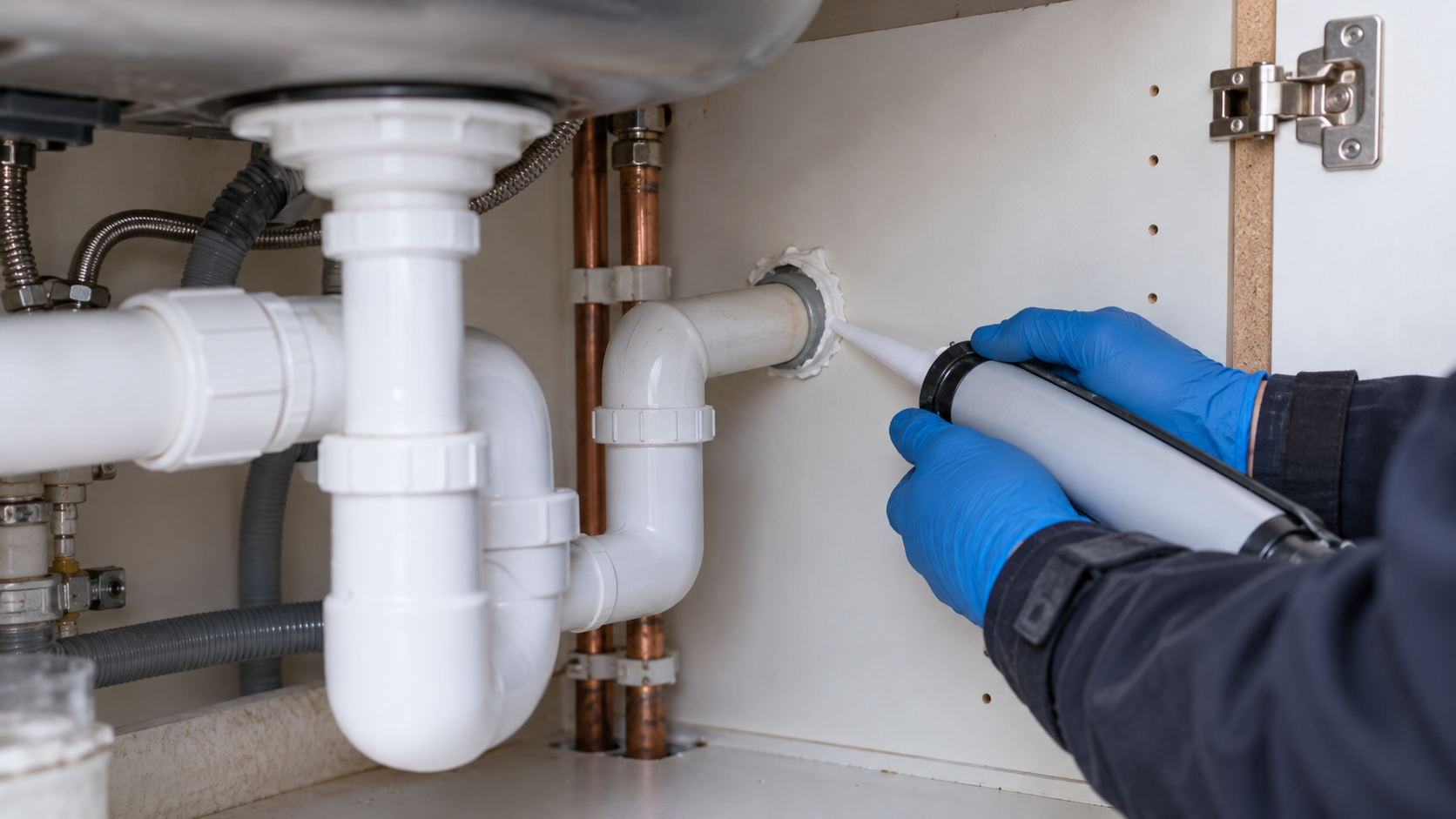
Begin where the signs are strongest. Check along the edges of the floor rather than only the middle of the room. Look behind movable appliances where it is safe to do so, beside service pipes, around the back of cupboards and at the bottom of external doors. A mouse can use a surprisingly narrow opening: Portsmouth City Council advises checking gaps large enough to admit a pencil. That comparison is a practical reminder to inspect small details, not a reason to pull apart fittings.
In a kitchen, the route may pass through a cupboard and disappear behind a plinth. In an older house, a gap around pipework or an uneven threshold can be more revealing than a visible hole in an outside wall. Photograph possible openings and keep a simple list. Do not seal an opening blindly if you suspect animals are trapped within a void. An inspection can establish the route and the sensible order for control and proofing.
Remove easy food and water
Put cereals, flour, pet food and other dry goods into sound, closed containers. Dispose of packets that have been gnawed or contaminated, clean crumbs from shelves and floors, and empty food waste regularly. Avoid leaving a pet bowl out overnight after feeding. Check that bins close properly and that a leaking pipe is repaired. These steps make the building less attractive and make new signs easier to spot. They are useful whether the evidence eventually points to mice or another pest.
Clean food preparation surfaces before using them. If you find droppings in a cupboard, keep food and utensils away from that area until it has been cleaned appropriately. Do not handle unknown material with bare hands. People with a particular health concern should seek advice from a suitable health professional. Hygiene measures reduce exposure, but they do not close an entry route or remove an established infestation.
Check outside without overlooking shared spaces
Look at the building from the garden or entrance. Are there gaps around a pipe, damaged air bricks, poorly fitting doors or vegetation touching the structure? Can a bin lid be left open, or is bird food accumulating nearby? Record what you can see without climbing or opening unsafe areas. The aim is to give an inspector useful information and to identify simple housekeeping changes you can make immediately.
In a flat or terraced property, signs in one kitchen do not necessarily mean the route begins there. Service runs, adjoining voids and shared waste areas can connect spaces. Tell the landlord, managing agent or relevant neighbour about verified signs when their cooperation is needed to inspect or repair a shared part of the building. Describe the evidence rather than guessing at its source. A coordinated check is often more useful than repeatedly treating only the room where a mouse was seen.
Know when to ask for an inspection
Ask for help if fresh droppings continue to appear, you see a mouse indoors, food is repeatedly damaged or you cannot locate the likely entry point. An inspection is particularly valuable when signs extend through several rooms or involve a loft, wall void or shared building fabric. It can distinguish mouse activity from other possibilities and identify places that need attention. Our mice control service explains the local approach to inspection and entry routes.
If the signs are larger, concentrated near drains or accompanied by a different pattern of movement, do not assume the animal is a mouse. The rat control page covers that separate problem. Sounds in a loft may also warrant a different assessment; see our squirrel control guidance. Correct identification matters because the routes and response can differ.
What a useful inspection should answer
Be ready to show photographs, damaged items and the list of places where you noticed signs. Explain when you first found them and whether new signs appeared after cleaning. Ask where activity is confirmed, which openings may be contributing and what should be repaired or monitored. You should understand the proposed next steps and any precautions relevant to your household before treatment begins.
A lasting response considers both the animals present and the conditions that let them use the building. Food storage and cleaning help, but a missed opening can allow activity to return. Equally, sealing a visible gap without understanding the wider route may leave the real access point untouched. Keep notes on any later sightings or signs so that progress can be assessed against evidence rather than a single quiet night.
Avoid treating a quiet evening as proof that the issue has ended. Mice can move between parts of a building, and signs may appear in a cupboard or room. Recheck the places you recorded, looking for fresh material rather than moving everything. If you rent, keep a record that you can share with the person responsible for repairs. For a business, keep any food and preparation area out of use until it has been assessed and cleaned under your food safety procedures. These records keep the next conversation focused and help track whether changes are working.
A practical checklist for today
Photograph the signs. Check safe, accessible edges of the room and likely pipe gaps. Protect food, clear crumbs, close bins and remove pet food after feeding. Write down where and when fresh evidence appears. If activity continues or the route is uncertain, arrange an inspection through our contact page. You do not need to identify every hidden space yourself; a clear record of what you can observe is a strong starting point.