


MICE CONTROL / HILLINGDON
Mice Control Hillingdon
Mouse activity needs more than a response to the last sighting. Discuss the evidence, accessible routes and affected rooms so the inspection can inform a practical control and monitoring plan.
- Inspect fresh droppings along cupboard and room edges
- Trace accessible pipe penetrations and kitchen plinth routes
- Assess food access and signs in adjoining rooms
- Discuss appropriately placed control and monitoring measures
- Coordinate proofing advice with the activity found
Start with the rooms where signs appear
When enquiring about mice control in Hillingdon, give your postcode and describe exactly where you have noticed activity. A mouse crossing a kitchen floor, damaged packaging in a pantry and noises above a ceiling are useful observations, but they do not establish the same inspection scope. Explain when the signs began and whether they occur in more than one room. Mention products already used, recent building work and any gaps you have sealed.
The call should establish access arrangements and whether the initial visit is an inspection, an agreed treatment or both. In a rented property, check who can authorise work and how the occupier will receive instructions. The Hillingdon pest control homepage explains the wider enquiry process; this page focuses on mouse activity and its connected routes.
Separate fresh evidence from old marks
Accessible droppings, gnawing, disturbed food and repeated sightings help the specialist decide where to look. Their location matters: material behind a cooker can suggest a different route from signs inside an upper cupboard. Old droppings left after an earlier problem should not automatically be counted as continuing activity. Tell the specialist what has been cleaned and where fresh material has appeared since.
Identification also needs care where signs are incomplete. A scratching sound alone cannot distinguish mice from other animals, and different-sized droppings need assessment in context. If larger rodents are suspected, the rat-control inspection considers external and drainage-related questions separately. Photographs can support the enquiry; avoid disturbing unknown material merely to obtain a sample.
| Finding | Inspection focus | What to clarify |
|---|---|---|
| Fresh droppings in a cupboard | Accessible pipe entries and cupboard edges | Whether signs connect with another room or void |
| Gnawed food packaging | Storage locations and repeated damage | Which items and shelves are affected |
| Activity after a repair | Other openings and the repair boundary | Whether the original route was established |
| Noise without visible evidence | Location, timing and accessible spaces | Whether identification needs monitoring |
Read the spaces behind the kitchen
The inspection may follow accessible skirting edges, cupboard bases, service penetrations and openings behind appliances. Mice can move through connected voids, so the room where one was seen may not be the only area requiring attention. Explain whether the property has an extension, an adjoining flat or shared service cupboards. These details can influence which accessible spaces are included in the assessment.
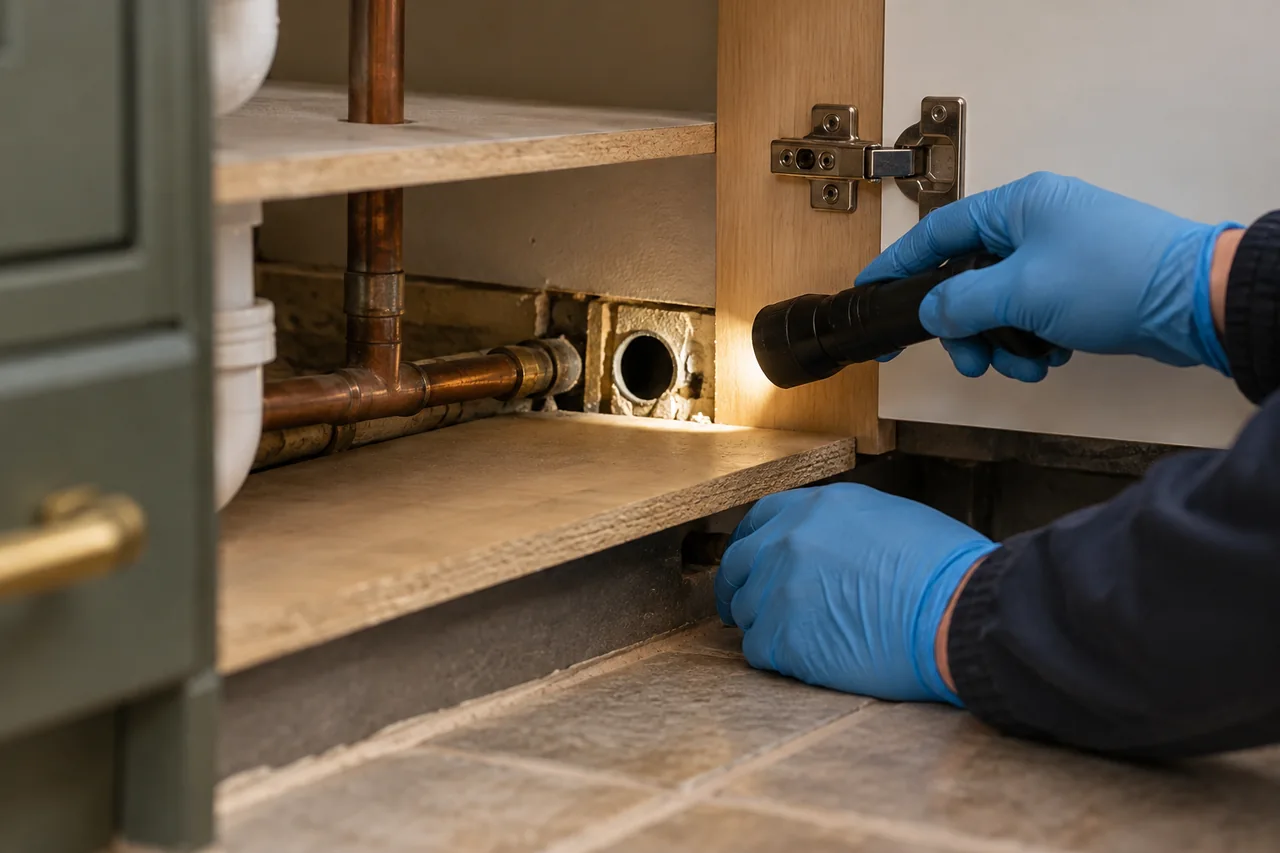
A torch and close visual inspection can help reveal openings and runways. Monitoring may be proposed where the route or current level of activity remains uncertain. Removing fitted units, moving heavy appliances or opening concealed building fabric is not assumed to be part of a standard visit. Agree those limitations before attendance. Roof-space noises without kitchen evidence may also need a separate squirrel assessment rather than a mouse treatment by assumption.
Match control measures to the findings
After identification, discuss how activity, access and the way rooms are used affect the proposed method. Suitable control measures might include monitoring, appropriately placed traps or a bait-based approach where justified. The choice should account for food areas, accessible voids and the extent of fresh evidence. Ask why a recommendation suits the findings and what alternatives or limitations have been considered.
Positioning matters as much as the equipment name. Measures should relate to evidence and accessible travel routes while accounting for children, pets and non-target animals. Where bait is proposed, ask how access by pets and wildlife will be prevented, how it will be checked and what removal arrangements apply. Before authorising work, confirm what the quote covers, which rooms are included and how the proposed response will be checked.
Know what happens during the visit
The agreed work should begin with a review of the signs and any changes since the enquiry. Show the specialist the original sighting locations and the areas that have been cleaned or repaired. If the evidence points beyond the agreed scope, discuss the implications before additional work proceeds. Access restrictions can affect both the inspection and the placement of control measures.
Where treatment is agreed, ask what has been positioned or applied and which areas must remain undisturbed. The explanation should cover safe access for occupants and pets, any cleaning instructions and how to report changes. Do not move devices to a more convenient position without advice: doing so can undermine their purpose or create a different access risk. Keep the visit instructions available to everyone who uses the affected rooms.
PREPARING FOR THE VISIT
Prepare the affected spaces.
Make the kitchen accessible
Clear small loose items from the relevant cupboard areas when asked, while keeping useful signs identifiable. Explain if plinths are fixed or appliance access is restricted. Do not move a heavy cooker or dismantle units merely to prepare. The team should confirm what access is required for the actual appointment.
Mention pets and previous products
Tell the specialist about pet feeding areas, young children and any traps, poisons or sprays already used. Give product names if available. Wait for instructions about removing earlier measures; combining approaches without explanation can make both assessment and safe placement harder.
Agree cleaning instructions
Ask what evidence should be left for inspection and what cleaning is appropriate afterwards. Unknown droppings and contaminated material should not be handled casually. If cleaning or disposal is outside the quoted scope, establish who will arrange it and which precautions apply before starting.

Use monitoring to judge the next step
A useful review considers dated fresh evidence rather than whether the property feels quieter. Keep a short record of sightings, new droppings and packaging damage, noting the room and nearest fitting. Report a change in location as well as a change in frequency. The specialist can then relate those observations to the measures used and the areas that could not be reached.
Further attendance may be needed where activity persists, the route remains uncertain or the agreed plan includes follow-up. Confirm the review arrangements and whether additional visits are included in the price. The review should distinguish fresh activity on the original route from signs that point towards another connected void. If evidence stops, ask how long monitoring should remain in place and how any control equipment will be removed or managed.
Proof the route at the right time
Proofing advice should distinguish a suspected active route from an unrelated opening. Discuss which gaps can be addressed, suitable materials and whether a building repair needs another trade. The timing should fit the control plan rather than simply closing the most visible hole. Shared service voids may require the landlord or managing agent to coordinate work beyond one flat.
Food storage and waste handling also affect the conditions around mouse activity. Explain where dry goods, pet food and rubbish are kept so practical changes can be discussed alongside the findings. Cleaning does not replace inspection of an entry route, and an isolated repair does not establish that every connected opening has been addressed. A clear record of recommended repairs makes the final review more useful.

QUOTATION AND SCOPE
A quote for the work involved.
A mouse-control quotation depends on the affected areas, access, evidence and proposed response. Explain whether activity is confined to a kitchen or appears across several floors. Ask whether the initial assessment, control measures, proofing and follow-up are separate parts of the quote. Parking or restricted access can also affect arrangements. Describe fixed kitchen units, shared cupboards and any areas that require permission so the quotation reflects the accessible work. Contact the team with your postcode and the signs found so the actual scope and any charges can be explained before work is agreed.
| Scope factor | Question before booking |
|---|---|
| Rooms and connected voids | Which accessible areas are included? |
| Control and monitoring | What measures and review arrangements are quoted? |
| Proofing work | Is it included, separate or a recommendation for another trade? |
| Shared access | Who must arrange permission and entry to common spaces? |
TIME-SENSITIVE ENQUIRIES
When a prompt assessment matters.
If mice are repeatedly appearing in a food preparation area or an occupied room that cannot be kept separate, explain this when calling. Give the location and timing of fresh signs, and mention any products already used. The team can discuss urgency, availability and the next assessment. Confirm the available appointment by phone and explain if food storage or shared kitchen use makes preparation difficult.
QUESTIONS ABOUT MICE CONTROL
Before arranging the visit.
Does one mouse sighting mean several rooms need treatment?
Not automatically. The sighting starts the assessment, while fresh signs and accessible routes help establish the affected zone. Explain evidence in adjoining rooms and shared spaces. The inspection should define the scope rather than assume every room is involved.
Should I seal the hole where I saw a mouse?
Photograph or describe the opening and wait for advice about timing. The route needs to be related to activity, and other connected openings may matter. Proofing should fit the control plan rather than proceed on a single sighting alone.
Will kitchen plinths or appliances be removed?
Do not assume dismantling or heavy moving is included. Explain the fittings and access restrictions when enquiring. The quoted inspection should identify accessible areas and explain whether further investigation or another trade may be required.
Can control measures be used around pets?
The proposed approach must account for the pets and rooms involved. Tell the specialist about feeding areas and where animals can reach. Ask for placement and access instructions specific to the actual method. Keep the supplied instructions available to everyone who feeds or looks after the animals.
What information helps at a follow-up?
Provide dates, rooms and locations of new signs, including any changed activity after cleaning or repairs. Do not reposition devices without advice. These observations help distinguish persistent activity from old evidence and show whether a different route needs attention.
Is proofing included in mouse control?
That depends on the quoted scope and the building work required. Ask which openings are covered, who will carry out repairs and when they should happen. Shared or concealed routes may require permission or separate work beyond the initial appointment.