


FLEA TREATMENT / HILLINGDON
Flea Treatment Hillingdon
Flea treatment needs an assessment of the rooms and resting areas that support activity. Explain where insects are appearing so property preparation, suitable control and any veterinary advice for pets can be coordinated.
- Map jumping-insect sightings around floors and resting areas
- Inspect accessible carpet edges and upholstery seams
- Discuss pet routines and recently occupied rooms
- Agree preparation for the proposed environmental treatment
- Review fresh activity against the flea life cycle
Explain where you are finding fleas
A flea enquiry is most useful when it identifies the places where insects are actually being noticed. Give your Hillingdon postcode and explain whether activity occurs beside a sofa, around a pet bed, in a bedroom or throughout several rooms. State when the problem began, whether the property was recently empty and whether animals currently use it. A home without a resident pet can still need an assessment of earlier occupancy and other possible sources.
The initial conversation should clarify which rooms are to be inspected and who can provide access. Explain any earlier treatment and changes in cleaning or pet routines. If you are unsure which pest is involved, start with the Hillingdon pest control service and describe what you have seen. For fleas, identify the floor areas and furnishings involved.
Confirm the insect before planning treatment
Jumping insects are an important clue, but a report of irritation on its own does not identify fleas. Describe what you have seen and, if practical, provide a clear photograph of an insect without spreading affected material. The specialist may examine specimens, visible insects and the locations where activity is concentrated. A torch or hand lens may help with accessible details; the actual investigation depends on the evidence available.
Identification keeps the enquiry focused on the right spaces. Fleas and bed bugs require different assessments, and an insect found near a bed is not automatically either one. If evidence points towards mattress seams or bed-frame joints instead, the bed bug inspection process explains those checks. Uncertainty should be stated, with any monitoring or further examination explained before treatment is chosen.
| Observation | Area to discuss | Planning implication |
|---|---|---|
| Repeated jumping insects near a sofa | Accessible upholstery seams and surrounding floor | Define the resting-area treatment boundary |
| Activity around pet bedding | The bedding location and animal movement | Coordinate property work with veterinary arrangements |
| Sightings after a period of vacancy | Previously used rooms and stored furnishings | Explain occupancy history and accessible sources |
| Unidentified insects near a bed | Specimens, photographs and the bed surroundings | Confirm identification before choosing a method |
PREPARING FOR THE VISIT
Prepare the affected spaces.
Clear the agreed floor spaces
Ask which rooms and floor edges must be accessible. Remove small loose items as instructed, while avoiding unnecessary movement of suspect furnishings between rooms. Explain fixed or heavy furniture before attendance. The preparation should make the proposed work possible without assuming that every item needs to be discarded.
Confirm cleaning and laundry timing
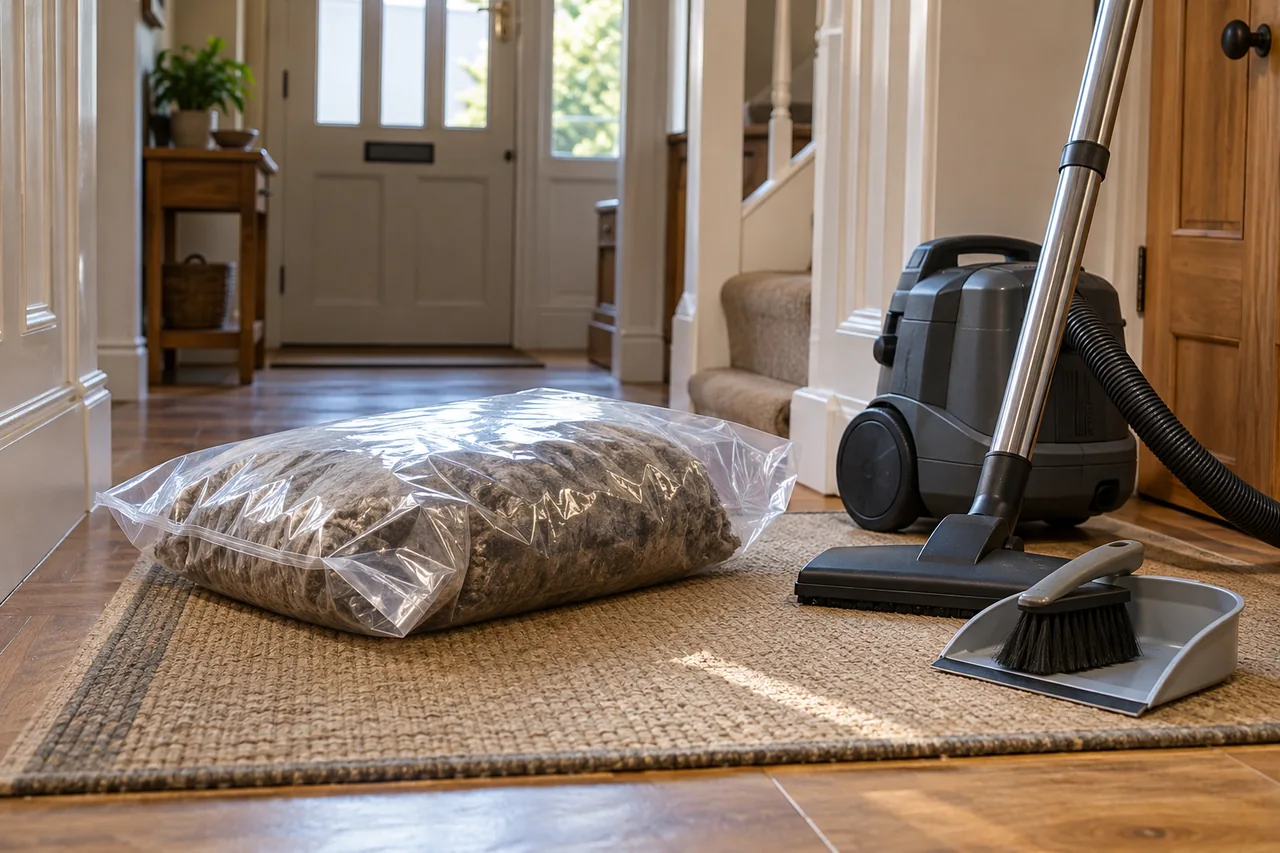
The required preparation may include vacuuming or handling washable furnishings, but the timing should be supplied for the method proposed. Ask how waste and affected linen should be managed and what cleaning must wait after treatment. Keep those instructions separate from routine household cleaning plans.
Arrange access for pets and people
Discuss all animals using the affected spaces and any arrangements made with a vet. Confirm where pets and occupiers should be during the visit, any re-entry restrictions and how the room will be made available afterwards. Do not assume that a product described for one use suits another.
Assess the environment around the host
Flea activity is not confined to the animal on which an adult feeds. Immature stages can occur in the surrounding environment, making resting places, floor edges and accessible soft furnishings relevant to the inspection. Explain the routes pets use between rooms and any furniture they regularly occupy. The assessment should relate those routines to actual sightings rather than treating every soft surface as equally affected.
A practical room survey may consider carpet margins, accessible gaps, upholstery seams and places beneath movable furniture. Tell the specialist about stored items, fixed units and any area that cannot be reached safely. Moving a heavy sofa or clearing an entire room is not assumed to be included. Agree access and the proposed treatment boundary, particularly where only part of a shared property is under your control.

Coordinate property control with pet care
The proposed property treatment should reflect identification, the affected surfaces and the way the rooms are occupied. Targeted environmental control may be considered alongside cleaning, preparation and source management. Ask which measures are proposed, where they would be used and what they are intended to address. Explain earlier sprays or powders so their locations and timing can be considered when selecting compatible work.
Treatment of an animal is a separate matter for veterinary advice. Tell the specialist whether pets are receiving care and how their access to the property will be managed. Household pest-control products should not be substituted for products intended for an animal. Before authorising work, confirm the arrangements for occupants, pets and the treated floor areas, including any specific instructions that must be followed before rooms return to use.
Interpret later sightings in context
The flea life cycle is relevant to review: a later sighting needs to be considered alongside the treatment used, environmental conditions and the timing of the visit. It should not be interpreted from an isolated observation alone. Keep dated notes of the room, nearest furnishing and frequency of fresh sightings. Explain whether pet access, cleaning or room use has changed since treatment.
Follow-up may be necessary where the agreed programme, persistent activity or remaining source conditions require it. Ask when a review should take place, what is included in the quotation and which observations justify an earlier call. The review timing needs to reflect the work completed and the pattern of new insects. If the pattern changes to another room, report that location rather than simply requesting that the original area be treated again.
Keep the agreed floor areas accessible
At the appointment, show where recent insects were found and explain any changes since the call. A concentrated patch beside a chair and activity across several bedrooms can lead to different access and scope discussions. The specialist should be able to explain whether the evidence supports the original plan and whether anything further needs agreement before work proceeds. Mention an affected room that has been closed or emptied since the enquiry.
Where treatment is agreed, the work should follow the confirmed method and preparation instructions. Ask which surfaces have been addressed, what must remain undisturbed and whether any part of the room was inaccessible. Keep the instructions available to other occupiers or cleaners. A subsequent deep clean or rearrangement of furnishings can affect the intended approach, so establish the cleaning sequence before making those changes.

QUOTATION AND SCOPE
A quote for the work involved.
A flea-treatment quote depends on the affected floor area, furnishings, preparation and proposed review arrangements. Explain whether activity centres on one resting place or is being noticed across several rooms. Restricted access, heavy furniture and work that cannot proceed before preparation is completed may affect the scope. Ask which assessment and treatment elements are included, what would require separate agreement and whether follow-up is part of the quoted work. Contact the team with the property postcode and room details for an explanation of the applicable charges before booking.
| Part of the work | What to confirm |
|---|---|
| Affected floor area | Which rooms and accessible furnishings are included? |
| Preparation | What cleaning or movement is required before attendance? |
| Occupancy arrangements | What access and return-to-use instructions apply? |
| Review | Is further assessment included and when should fresh signs be reported? |
Reduce the conditions behind recurrence
Longer-term prevention should connect the property findings with animal routines and practical housekeeping. Discuss accessible cleaning around resting areas, management of washable items and how treated spaces should be maintained after any waiting period. Follow the advice for the actual method rather than applying a general cleaning timetable. Veterinary advice remains the appropriate route for an animal’s continuing flea prevention.
Where activity may relate to former occupants or another animal source, explain the property history and who can investigate adjoining or shared areas. The inspection cannot establish an inaccessible source simply from a report of insects in one room. A useful final plan separates actions for the occupier, any arrangements for pets and work that depends on a landlord or another responsible person.
TIME-SENSITIVE ENQUIRIES
When a prompt assessment matters.
Tell the team if repeated flea sightings are affecting occupied bedrooms, shared accommodation or rooms that cannot readily be kept separate. Describe the insects seen, the areas involved and any products already used. The call can establish the next assessment and available appointment. Avoid combining household treatments while waiting, and confirm the arrangements for pets and people before any work begins.
QUESTIONS ABOUT FLEA TREATMENT
Before arranging the visit.
Can a property have fleas without a current pet?
Yes, the enquiry may need to consider earlier occupancy or another animal source. Give the history of the affected rooms and any recently moved furnishings. Identification and a property assessment are still needed; the absence of a pet does not establish what the insects are.
Does treating a pet replace treatment of the rooms?
Not necessarily. The animal and the surrounding environment are separate parts of the assessment. Ask a vet about the pet and discuss the affected rooms with the pest-control team so preparation, access and timing can be coordinated appropriately.
Should I vacuum before the appointment?
Ask for the preparation instructions for the proposed visit. Vacuuming may be part of preparation, but the timing and waste-handling instructions should be clear. Also confirm which cleaning must wait after treatment so the intended approach is not disrupted.
Must all carpets and furniture be removed?
No removal requirement is assumed. The specialist needs to assess affected areas and access before advising on specific items. Explain what is fixed or difficult to move and wait for instructions before taking suspect furnishings into an unaffected room.
Why might insects be seen after treatment?
Later sightings need interpretation against the flea life cycle, actual method and conditions found. Record dates and locations and use the agreed review arrangements. Do not assume a standard outcome or reapply products without first explaining the observations to the team.
Can the room be used immediately afterwards?
Return-to-use arrangements depend on the method and products used. Confirm advice for all occupiers and animals before the appointment. Follow the instructions supplied for that treatment, including any restrictions on access, ventilation or subsequent cleaning.