

BED BUG TREATMENT / HILLINGDON
Bed Bug Treatment Hillingdon
A bed bug enquiry should establish the evidence and the rooms involved before a treatment is chosen. Discuss sleeping arrangements, furniture and preparation so the proposed visit addresses the affected space rather than bites alone.
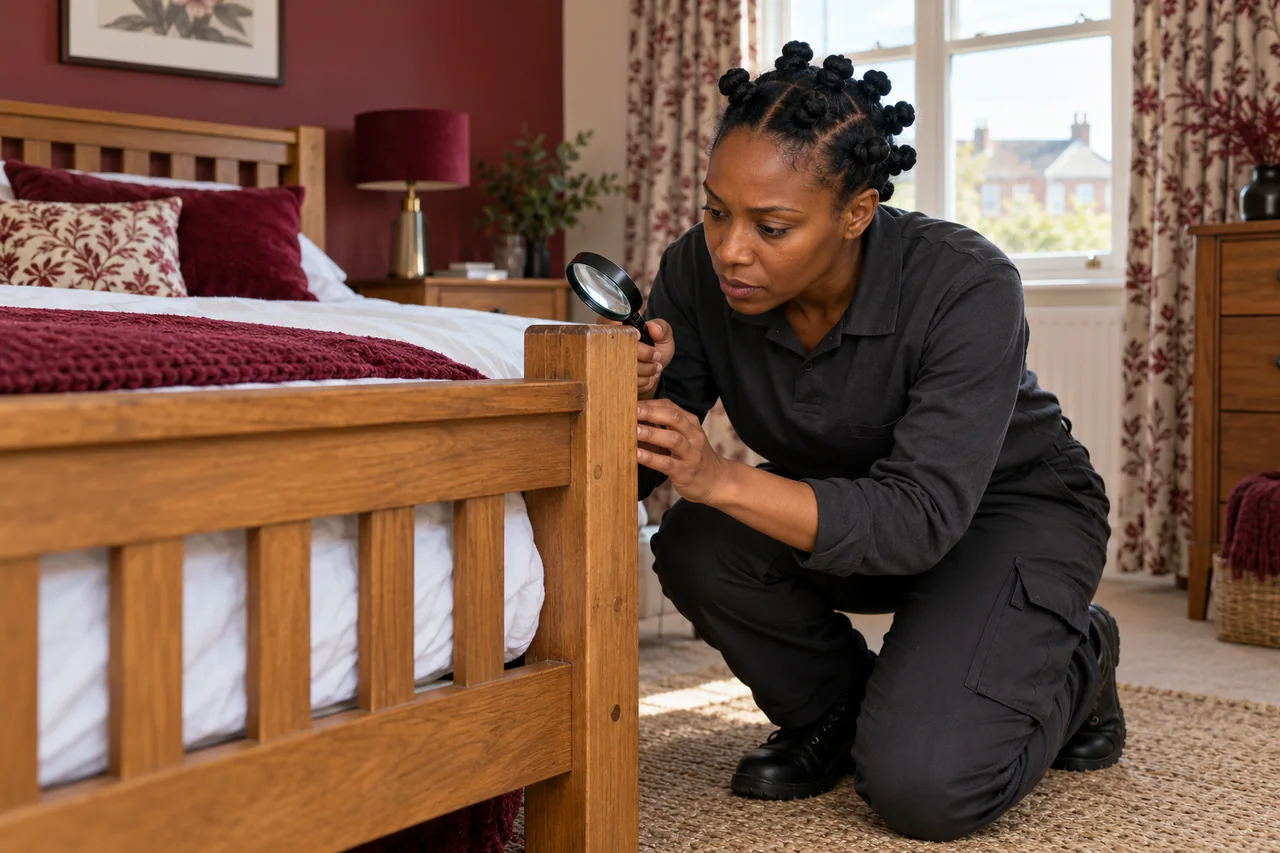
- Inspect mattress seams and accessible bed-frame joints
- Examine spotting, shed skins and insects for identification
- Assess nearby furniture and connected sleeping spaces
- Agree preparation matched to the proposed treatment
- Review fresh evidence against the work and room access
PREPARING FOR THE VISIT
Prepare the affected spaces.
Wait for the room-specific preparation list
Ask what must be bagged, moved, washed or left available for examination. Requirements depend on the proposed method and the furniture involved. Do not strip every room or move suspect belongings elsewhere using a general online checklist; explain any task that you cannot complete before attendance.
Discuss furniture and storage access
Describe bed storage, headboards, bedside units and heavy furniture when arranging the visit. Confirm who will move or dismantle anything required. Safe access to the relevant edges matters, but extensive dismantling should be agreed rather than attempted merely to prepare for an uncertain inspection.
Plan for occupants and pets
Check whether people or animals need to leave and how return to the room will be managed. Mention anyone whose circumstances affect the arrangements. Ask what advice applies to bedding and later cleaning, and make sure every occupier can follow the instructions supplied for the actual treatment.

Describe the sleeping spaces involved
When enquiring about bed bug treatment in Hillingdon, explain which rooms are used for sleeping and where suspected signs have appeared. Include sofas or other furniture regularly used overnight. Give the date of the first observation, any recent movement of beds or belongings and any products already applied. The number of occupied sleeping spaces is more informative than simply describing the property as a certain number of bedrooms.
The call should establish how the rooms can be accessed and who can authorise work. In rented or shared accommodation, preparation instructions may need to reach several occupiers. The Hillingdon pest control homepage explains the wider enquiry arrangements. For this service, a clear account of where people sleep and where physical evidence has been found helps define the initial inspection rather than assuming every room needs the same response.
Look for physical evidence, not bites alone
Bites do not identify bed bugs on their own. Accessible insects, dark spotting, eggs or shed skins around sleeping areas can provide more useful evidence. Explain whether the marks are new and whether anyone has already cleaned, sprayed or moved the affected furniture. A clear photograph can support the enquiry, but it may not establish the extent of activity or distinguish every small insect accurately.
The specialist should consider the evidence in context before recommending work. If jumping insects or activity around pet resting areas are the main observation, a flea assessment raises different inspection and preparation questions. Avoid treating a symptom as a confirmed infestation. Where the initial signs remain uncertain, ask what inspection or monitoring would help clarify the cause and how that affects the proposed appointment.
Inspect the bed and the space around it
The inspection may examine accessible mattress seams, bed-frame joints, headboards and nearby furniture. The aim is to find evidence of harbourage and understand how far activity may extend around the sleeping area. Explain how furniture is assembled, whether storage sits beneath the bed and which items have recently been moved. Locked drawers, heavy furniture and fixed fittings can limit access and should be discussed in advance.
An inspection does not automatically include dismantling every item or opening concealed building fabric. Agree what can be checked safely, who will move belongings and whether more extensive access is needed. In a shared property, signs in one room may require questions about adjoining sleeping areas, but this should be assessed rather than assumed. The findings should identify confirmed evidence, the area considered and any limitations that could affect the treatment proposal.

| Reported sign | Inspection location | Point to establish |
|---|---|---|
| Insect near a bed | Accessible seams, joints and nearby furniture | Identification and associated harbourage |
| Dark spotting or shed skins | The item and surrounding sleeping area | Whether evidence indicates current activity |
| Signs after furniture movement | Original and new locations | Which spaces need consideration |
| Bites without an insect sample | Sleeping arrangements and physical evidence | Whether the cause remains unconfirmed |
Choose the method after the room assessment
Treatment choices depend on identification, the extent of activity, accessible harbourage and the contents of the room. Appropriate options may involve targeted products, physical measures or another assessed approach. For a targeted product treatment, discuss the identified harbourages, suitable surfaces and any areas that cannot be reached; products must be used according to their authorised label directions. Ask what each proposed measure is intended to address and what preparation it requires.
If heat is being considered, discuss a separate bed bug heat assessment, including sensitive belongings, room layout and temperature monitoring. Do not assume that a conventional treatment and a heat service have identical preparation or access instructions. The quotation should explain the rooms included, any treatment limits and how monitoring or further visits will be arranged. Unresolved access problems should be considered before the work is agreed.
Keep the agreed treatment area workable
At the appointment, show the specialist the original signs and explain what has changed since the inspection or call. Include furniture that has moved, cleaning completed and any new sleeping locations. If the room differs substantially from the agreed preparation, discuss what can proceed and what needs another arrangement. Moving suspect belongings out of the room without instructions can complicate the assessment of affected areas.
During the agreed work, follow the method-specific access arrangements for people and pets. Before the visit ends, confirm what has been treated, which items must remain in place and what cleaning should wait. There is no single re-entry interval appropriate to every product or treatment. The occupier needs clear instructions for the actual work, including how the room can be used afterwards and who to contact if preparation or return-to-use advice remains unclear.
Judge progress using new, dated observations
Fresh evidence recorded by date and location makes a review more useful. Note where any insects or spotting appear rather than relying only on whether bites have stopped. Keep track of furniture movement, changed sleeping arrangements and cleaning completed after the visit. The specialist can then relate those observations to the method used, the spaces reached and any limitations documented during the work.
Further attendance may be needed because of the pest life cycle, the extent of activity or the agreed treatment plan. Confirm the purpose and timing of review and whether further visits are included in the quote. A sighting needs interpretation in that context; it does not automatically establish either success or failure. Ask which signs should be reported sooner and what should remain undisturbed while progress is being assessed.

QUOTATION AND SCOPE
A quote for the work involved.
A bed bug quotation should describe the sleeping spaces and furniture included, not merely a headline room count. Access, preparation, the extent of activity and the proposed method can all affect the scope. Ask whether inspection, treatment and review visits are separate or included together, and what would change the price if another room becomes relevant. Heat should have a clearly identified assessment and quotation where considered. Contact the team with your postcode and room details for the actual arrangements and charges. Identify heavy beds, fixed headboards and under-bed storage in advance, as these can affect preparation and the access required for the quoted work.
| Record to keep | Why it helps the review |
|---|---|
| Date and exact location of new evidence | Distinguishes changing activity from old marks |
| Furniture or sleeping-place changes | Shows where the room use differs from the plan |
| Cleaning completed after treatment | Helps interpret method-specific aftercare |
| Previously inaccessible areas | Identifies limitations needing further discussion |
Manage belongings without spreading uncertainty
Aftercare should explain how the treated room and its contents are to be managed. Ask for instructions about bedding, furniture, storage and cleaning that relate to the actual method. Do not assume that throwing away a mattress or moving a bed to another room is required. Any disposal decision should be considered alongside identification, treatment suitability and the risk of moving suspect material through the property.
For rented or shared premises, ensure the relevant occupiers receive the same instructions. Report signs in another sleeping area rather than quietly changing rooms or moving belongings before the review. Practical prevention also means checking the handling of incoming furniture and keeping accessible areas available for observation. These steps should support the control plan; they do not create a guarantee against a future introduction of bed bugs from another source.
TIME-SENSITIVE ENQUIRIES
When a prompt assessment matters.
If suspected activity affects an occupied sleeping space, explain this promptly when calling. Give the physical evidence, rooms used overnight and any difficulty keeping belongings in place. Avoid changing bedrooms or carrying suspect furniture through the property before receiving advice. The team can discuss the next assessment and available appointment, including how access and preparation can be arranged around occupied bedrooms.
QUESTIONS ABOUT BED BUG TREATMENT
Before arranging the visit.
Can you confirm bed bugs from bites?
Bites alone cannot confirm them. Explain any insects, spotting or shed skins found near sleeping areas, and whether signs occur in more than one room. An inspection may be needed before the cause and suitable treatment scope can be established.
Do I need to replace the mattress?
Do not assume replacement is necessary. The condition of the item, evidence and proposed method need assessment. Ask how it should be handled and whether disposal is recommended before moving it through the property or buying replacement furniture.
Can I sleep in another room while waiting?
Discuss the practical difficulty with the team before moving bedding or suspect belongings. A change of sleeping space affects how the property is used and may complicate the inspection picture. Ask for advice matched to your circumstances and the appointment planned.
Are preparation instructions the same for heat and other treatments?
No single preparation list suits every method. Heat-sensitive items, room layout and access can introduce different requirements. Confirm the actual treatment proposal and follow its instructions, including what must remain in place and what needs separate handling.
Why might another visit be recommended?
Review may be needed because of the pest life cycle, the extent of activity or areas that were inaccessible. Ask what the visit will assess and whether it is included in the quotation. Keep dated observations to support that discussion.
What cleaning can I do afterwards?
Follow the instructions for the actual method rather than a general waiting period. Ask which surfaces can be cleaned, what should remain undisturbed and how bedding should be managed. If advice is unclear, check before beginning work that could interfere with the plan.